

© Landesinitiative Fachkraft im Fokus
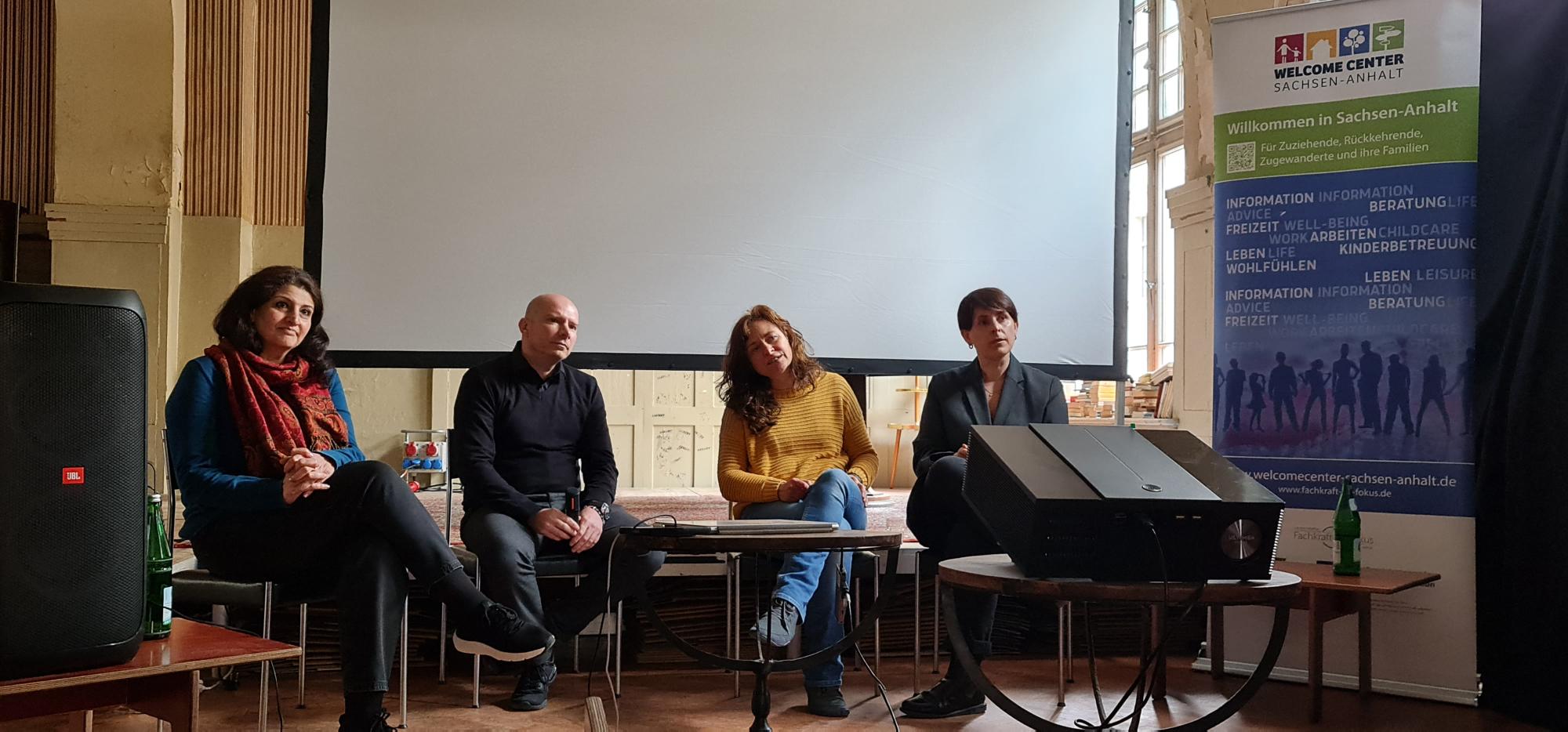
How can people from Ukraine who have been living and working in Germany for years—and whose children are growing up here—secure a long-term future for themselves legally? This pressing question was the focus of a well-attended information event on April 16, 2026, at the old city library in Zeitz, hosted by the WelcomeCenter Saxony-Anhalt in collaboration with the Ukrainian Center for Integration and Cultural Exchange Zeitz e. V.
A question of growing urgency
The residence permit under Section 24 of the Residence Act, which governs the protection status of most Ukrainian refugees in Germany, is valid until March 2027—and whether it will be extended remains unclear at this time. For many people, this means uncertainty, despite their active integration. They speak German, have steady jobs, and their children have long been part of the local school and training system. The desire to build a permanent future in Germany is real—and justified.
The WelcomeCenter Saxony-Anhalt takes this situation seriously. After all, the question of prospects for staying is not just a humanitarian one—it is also a matter of securing a skilled workforce in Saxony-Anhalt. Qualified individuals who are already rooted in the state, work productively, and participate in society make a valuable contribution to the region’s future. Keeping them here is in everyone’s interest.
Strong Network – Bundled Expertise on the Ground
What particularly distinguished the event in Zeitz was the WelcomeCenter’s consistently networked approach. Anja Reißmann, regional advisor in the Burgenlandkreis district, did not organize the event alone but specifically engaged the relevant partners—thus bringing together in a single evening exactly the expertise the participants needed.
Roula Rached from the Recognition Advisory Service of the IQ Network Saxony-Anhalt (Halle office) provided information on the recognition of foreign professional qualifications—a key topic for anyone wishing to have their qualifications recognized in Germany. Thomas Leistner from the Burgenlandkreis Migration Agency, responsible for skilled worker immigration at the Foreigners’ Registration Office and an advisor for labor market integration, shared in-depth practical knowledge of residence law. As an interpreter, Liudmyla Kapustina ensured that no question went unanswered—by translating between German and Ukrainian and thus facilitating communication on an equal footing.
It is no coincidence that the WelcomeCenter also consciously collaborates with a migrant self-help organization—the Ukrainian Center for Integration and Cultural Exchange in Zeitz. Such associations understand the realities of life in their communities, enjoy trust, and reach people who might not be reached through traditional government channels. Strengthening and highlighting this partnership is part of the WelcomeCenter’s mission.
What the participants learned
Forty Ukrainian women and men attended—a strong turnout that highlighted the great need for information.
Anja Reißmann opened the session with an overview of the current labor market situation in the Burgenland district: Figures from the Employment Agency show that an increasing number of people from Ukraine have secured employment subject to social insurance contributions—within a year, their numbers rose by a remarkable 40 percent. This trend demonstrates that integration into the labor market is succeeding—and the WelcomeCenter actively supports this process.
Roula Rached from the IQ Network then explained the various pathways to the recognition of foreign professional qualifications: What are the differences between vocational training and university studies? What does it mean when a profession is regulated? Which documents need to be translated—and when? Practical answers to questions that determine professional prospects.
The WelcomeCenter itself provided information on alternative residence permits that go beyond Section 24: What requirements must be met? How can one secure a permanent residence permit through skilled employment? It became clear: A recognized professional qualification, good German language skills, and the ability to independently support oneself are the three central pillars—but there are also paths for people without formal qualifications or those aiming to pursue vocational training in Germany.
Life’s Questions
The subsequent Q&A session made it strikingly clear just how concrete and personal the participants’ concerns are:
The questions ranged from practical to existential: What happens if I lose my job? Will the months I’ve already worked under Section 24 count toward a permanent residence permit? Is it worth having my high school diploma recognized as well? What opportunities do I have as a teacher to work in Germany? How do I meet the minimum salary requirements if I am over 45 years old? And: How can I also secure my children’s residency in the long term?
At the end of the two-hour event, many participants took the opportunity to discuss their individual situations in one-on-one conversations with the experts. This is precisely the added value of such formats: information meets personal counseling—and people go home with concrete next steps.
To ensure the evening’s content continues to have an impact beyond the event, Anja Reißmann created a presentation specifically in plain language. This was subsequently made available to both the participants and the Burgenlandkreis Integration Network—as an accessible reference guide for anyone who wants to review the information at their leisure or share it with others. The presentation is supplemented by a collection of links that provides access to further information online and helps users find relevant application forms quickly and easily.
Conclusion: Networking as the Key to Securing Skilled Workers
The event in Zeitz exemplifies what the WelcomeCenter Saxony-Anhalt achieves: It creates spaces where complex topics become understandable—for people who have already found their place in Saxony-Anhalt and wish to keep it long-term. It connects recognition counseling, the Foreigners’ Registration Office, migrant self-help organizations, and its own expertise into an offering that is greater than the sum of its parts.
Attracting qualified professionals is one thing—retaining them is the real challenge. The WelcomeCenter Saxony-Anhalt supports this process.
Please visit our information center for more information for refugees from Ukraine, on the recognition of foreign qualifications, and on other legal matters.